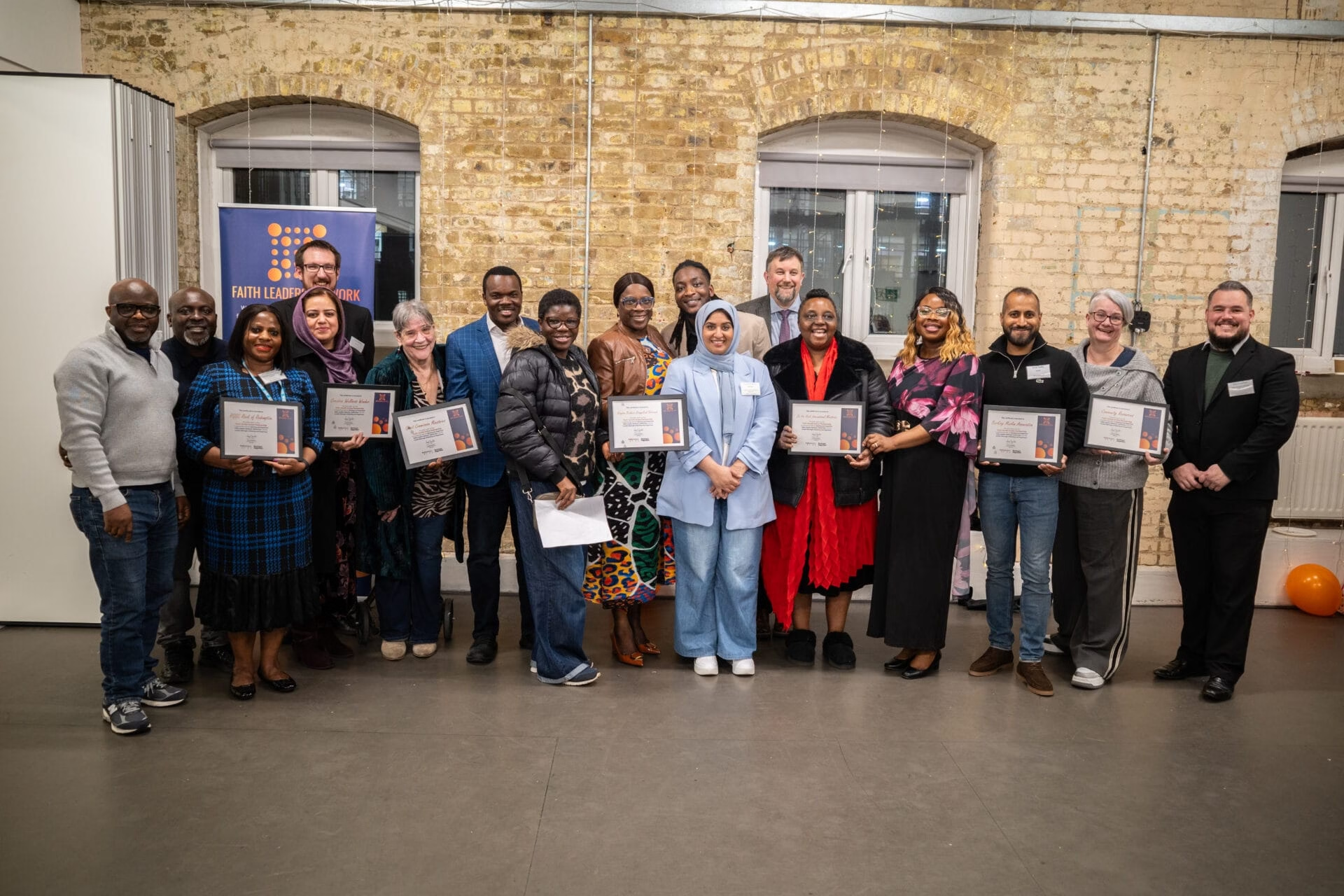
On Thursday 27th March, members of the Barking and Dagenham Faith Leaders Network, health leads and local councillors gathered together to celebrate the achievements of the network, and their work on supporting faith groups to tackle health inequalities locally. BDFLN was thankful to receive funding from the local authority public health team to run co-designed health projects, based upon the Faith Health Action Partnership model, leveraging the public messaging infrastructure which faith-based organisations naturally have.
The celebration event, featured key achievements of the faith leaders within the network, with a packed agenda, with attendees ranging from councillors and senior council officers to health partners, faith leaders and beneficiaries of the projects.
The event was opened by Councillor Saima Ashraf, Deputy Leader and Cabinet Member for Community Leadership & Engagement who spoke about the importance of community, the recognition of differences and the necessity of togetherness, and was followed by Andrew Welsby, Project Officer at FaithAction, who highlighted the range of projects and the impact upon communities, while pressing the need for continued long term funding.
A mini panel, consisting of project leads from Barking Muslim Association (BMA) and Apata Irapada, highlighted their co-designed projects in detail. Imran Raffiq from the BMA spoke about their programme of working providing training for staff and volunteers working on programmes for BMA on trauma informed practices.
“…it was not just signposting services, but also recognising the signs and symptoms, how we can support people who walk through out doors, and how we can create that bridge between helping people to support and move into accessing health services; understanding why people don’t ask the service, why people delay asking the service but also why they may not receive the service that they should do and that could be a struggle for them”
Imran’s comments showed how the BMA is addressing the consequent health impacts of adverse childhood experiences. With 60% of the population having such experiences, and being more likely to develop health issues later on in their life, the fact that the BMA is interested in this kind of work highlights the reactiveness of faith based organisations, reducing the potential of future health inequalities.
RCCG Apata Irapada had a different approach — their projects focused on cardiovascular diseases and diabetes in the Black community. The church representatives said that it worked because the people trusted them as a church, they leveraged on their religious positioning to address health inequalities; they ran a service which checked blood pressure and blood sugar levels – it was done in line with their Thursday and Sunday church services to ensure high participation. Apata Irapada was able to provide a trusted setting, exercising the innate relational capital which is present in all faith-based organisations. Pastor Ola Kuku described an elderly participant who only felt safe to speak about his health issues in the church:
“I hope I can talk to you because I don’t like talking to the doctor, they speak too much medical jargon, I don’t understand what they are saying to me, and when they are talking sometimes, I can’t even hear them. ”
Next up on the agenda was Manisha Modhvadia from Healthwatch Barking and Dagenham, who highlighted the need for closer working together, especially in the light of prevention and neighbourhood health. With Barking and Dagenham being one of the sites of the national pilot programme of the Neighbourhood Health programme, this is an important moment for health services to consider how they work with and in the community.
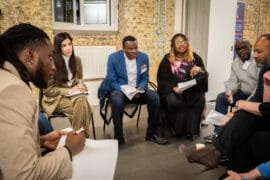
The event continued with breakout discussion groups, giving attendees the opportunity to have their own say on the key question: What makes a partnership between faith and health truly effective? Discussions gave valuable insights on issues such as digital literacy, culturally sensitive public health campaigns for public health issues, funding for longer projects so that grassroots organisations have enough time to promote their health offers, and that faith based organisations need continuous collaboration with local government in order to continue shaping public health:
“We need to continue collaborating….the council has a part to play, but so do we too [Faith Leaders], I don’t think it’s just a one way road.”
The event closed with words from Councillor Maureen Worby, Cabinet Member for Adult Social Care, Health and Housing, who reminded the faith leaders of their vital place in the community, of their relational capital and their unique standings as spiritual guides:
“I think the reality of building that trust with communities has a lot to do with you guys [faith leaders] being at the forefront – you are the ones that are going to do it for us, it doesn’t matter the authority the council have [they listen to you]”.
As the event drew to a close, there was an opportunity to celebrate the success of the groups that had taken part in the FHAP programme, as project leads received certificates and the opportunity to have a photograph with Cllr Ashraf, Cllr Worby and the FaithAction team.
Overall, the event was a spectacular celebration of the success of the Faith Leaders Network and the Faith Health Action Partnership projects, and the impact that can be achieved by producing collaborative ways of addressing health issues.